Saturday, July 15, 2006

In-Country


(Barrio Carmen near my house in the morning)

Well, I made it to Costa Rica safe and sound. The skies were clear and sunny most of the day and I saw some breathtaking views of both the Pacific and the Caribbean on my approach to Liberia.

Photo Hosted at Buzznet

(My host home)

I settled in at my host home with my new mamacita tica,(Costa Rican Mom). Her name is Doña Herminina. She is about four-foot-nine and has a smile that takes up her whole face. She lives in a cute little white house that has a patio that is open on several sides to the outside in order to get some air.


(My Host Mother)


I have my own spacious room with my own bathroom and shower and a fan. It was not five minutes unpacking my luggage and I had to start using my University of Chicago Spanish to English Dictionary...to kill a two-inch long spider. That was the only thing that freaked me out a little. I don´t like big spiders. I didn´t scream like a girl or anything though, I was completely macho about it.

What has struck me so far about Costa Rica is a completely different atmosphere than Mexico. Yeah, there are still Machos and Chicas wearing jeans two times smaller than they should be, but there is a difference here.

Peace.

In Mexico, I went through military checkpoints, had the army pull us over and search our bags. Here, there is only the civilian police. Maybe its just me, but people are much more relaxed and seem more at ease than Mexico.

Hey, that´s all for today.

Juanito.

Next Costa Rican Entry: Sunday Morning

Friday, July 14, 2006

Last Meal...

Well, everything is packed. I have tested the strength of the YKK zippers on my Outdoor Products backpack, and they are holding. I did not have to leave anything important behind. The MP3 player has been loaded with 239 songs for the trip. Everything from Miles Davis, The B-52's and Gnarls Barkley, to Chet Atkins and Aaron Copeland.

The one thing I almost forgot was toilet paper. Pathetic. You can live without Teryiaki Jerky and your tunes, but toilet paper is something that can't always be counted on.

Since we had everything together by 3pm today, we decided to go out for one last gringo meal before I left the country. I thought about it long and hard. I was really tempted to go for Mexican food, or a big bacon cheeseburger, maybe country fried steak with sawmill gravy, but in the end, ribs won out.


Specifically, Applebee's riblets. They may not be the best ribs in the world, but when I want some ribs and don't want any surprises, this is what I get. The price is right too. Then we followed it up with the Walnut Blondie for dessert.


Now, I'm heading to bed so I can get up way too early, so I can make it through security with enough different kinds of things that I'm probably going to get searched at least once.

Good night,

More news as soon as I am in country.

Juanito

Next Costa Rican Entry: In Country

Tuesday, July 11, 2006

Professor Cahill's Travel 101

Somewhere in my cramped closet, filled with yearbooks, photos, books, cassettes, shiny ties, and a flare gun,(absolutely no need for it, but its still one of my favorite possessions), is a box of papers that just says "John's Files". In that box is a cream colored file folder containing an article I cut out of Outside Magazine from the January 1997 issue. The article is entitled "Professor Cahill's Travel 101", and I always read it before I leave the U.S. It's written by one of the most excellent travel writers I have ever read: Tim Cahill. Think of Dave Barry with a machete and an English-Urdu phrasebook, and you are close. Anyway, this article is a crash course for any adventure traveler. There are 20 important rules that will help your trip be meaningful. Now I realize I'm not climbing Mount Everest, or going into the Amazon, but going to another country on my own for three weeks is one of the bravest things I have done. Here's the list:

Rule 1: Avoid Psychotic Travel Companions.
Rule 1, corollary 1: The most carefully chosen travel companions become psychotic.
Rule 1, corollary 2: Psychosis is contagious.


Rule 2: Have a quest.
"The quest is the most significant and consequential of all travel plans"

Rule 3: Exercise ordinary caution.
"Never, never, never put a marshmallow in your mouth and try to feed a bear."

Rule 4: You are the protagonist.
"You are the driving force. Make your myth a good one."

Rule 5: Boredom greases the cogs in the machinery of marvels.
"Bring along a big book. And remember...Boredom is the price we pay for marvels."

Rule 6: Stop whining.
Rule 6, corollary 1: This can't be stressed enough. No one wants to hear about your last bowel movement.

Rule 7: Read guidebooks.
Rule 7, corollary 1: Expect the books to be wrong or out of date.

Rule 8: It ain't about money.
Simply put, Cahill says don't spend all your time trying to save money. Don't try to bargain everyone down to nothing, use money to accomplish your quest-it should not become a barrier between you and the people you want to know.

Rule 9: Don't worry about too much gear.
Cahill packs the following in his kit: Immodium AD, a seat pad, hot sauce, dental floss, a Leatherman tool, duct tape, and a big book. A man after my own heart.

Rule 10: Don't follow rules.
"This is probably the most important rule."

Rule 11: Try the local foods.
"If you are a picky eater, stay home."
Rule 11, corollary 1: Take the usual precautions, but expect to get sick anyway.
Rule 11, corollary 2: See Rule 6, corollary 1.


Rule 12: Learn the rudiments of the local language.

Rule 13: You are the foreigner, d--------.
(sorry for the censorship, but my mom reads this.)

Rule 14: The "natives" have their pride.
Cahill says that we need to "inquire about the nature of the national soul."

Rule 15: Schedule a rest day now and then.
"Exhaustion seldom engenders insight"

Rule 16: Don't drink too much in a little basement bar just off a street called Florida in Buenos Aires...

Rule 17: Don't become involved with your guide.

Rule 18: Wait until the last possible moment to punch out disagreeable traveling companions.

Rule 19: Mold experience into stories as a mnemonic device.
"Guides and professional travelers mold the clay of experience into stories. All guides believe their stories are unforgettable. Some of them are.
Rule 19, corollary 1: You don't have to be a guide to tell guide stories.
Rule 19, corollary 2: All guide stories begin: "No sh--, there I was..."
Rule 19, corollary 3: The worse the experience, the better the story.
Therefore...


Rule 20: There are no bad experiences.

Juanito

Next Costa Rican Entry: Last Meal

Thursday, July 06, 2006

Research about Costa Rica Part III

Research about Costa Rica Part I
Research about Costa Rica Part II

What have I learned about Costa Ricans as a people from my research? Quite a bit. One of the things that is repeated over and over in every travel guide, internet sources, people I have talked to and the other books I have read says that Costa Ricans are some of the friendliest people in Latin America. Visitors are continually wowed by the level of friendliness and how they are very eager to help.

The other characteristic that is repeated often in describing Ticos is that they are extremely well-mannered and have a real desire to leave a good impression. The Spanish term for this is to "quedar bien", which literally translates to "remain good". This is not something that is uniquely Costa Rican, though. The desire to save face, and make sure that others save face is common in other Spanish speaking countries.

Many expatriates living in Costa Rica and guide books point out that Ticos will do anything to avoid conflict. Some people think that this may be part of the value that Costa Rican society as a whole places on peace. Tourists have complained that its hard to get straight answers in the country and that no one wants to ever tell you bad news, or how far it really is to the next town.

When I heard this one, I thought of two things: number one, tourists in general, and Americans in particular are not always sensitive when it comes to subtle signals contained in language and gestures, number two, Americans value being brutally honest and blunt so much, they can't appreciate the delicate touch that Latino cultures have in both custom and language. I appreciate people who are "straight shooters", but I find the Latino values of protecting the feelings and public images of others somewhat kinder and softer than the gringo Jack Hammer of bluntness. Sometimes, most of us know "the truth", but don't think its necessary to beat someone over the head with it.

Many of the values I learned about in Mexico are described as being just as common in Costa Rica: machismo, the value of family, a more laid-back attitude towards time, and placing relationships as more important than work.

I said all of that to say this: none of these traits and characteristics of Costa Ricans are necessarily true by a long shot. To judge a whole group of people based only on books and the opinions of others is to be prejudiced. To expect all Ticos to act a certain way is the same as when people from other countries think all Americans are cowboys. Some of it may be true, but there are just too many exceptions. All of my research is only there to help me understand things easier, not to give me all the answers.

Juanito

Next Costa Rican Entry: Professor Cahill´s Travel 101

Wednesday, July 05, 2006

Research About Costa Rica Part II

Click here to read the first post: Research About Costa Rica Part I

Costa Rica is very distinct in comparison to other countries in Central America. Here's some bullet points about the country:

* Costa Rica has no standing army, only a civilian police force.
* Costa Rica has the highest literacy rate in Latin America.
* It has a large middle class.
* Averages 80% voter turnout.
* Protects more of it's land under biological reserves and national parks than other countries in the area.
* Has active volcanoes, rainforests, and borders both the Pacific and the Atlantic Ocean.
* Main sources of revenue are Coffee, Bananas, and Tourism.
* Has a very high percentage of white-skinned persons, but many descendants of Africans and Jamaicans live on the Atlantic Coast and speak a mixture of English, Spanish and other sources called Lí­mon Creole.

Here's a little about it's history. Christopher Columbus discovered Costa Rica in 1502. It was named Costa Rica because the Spaniards expected gold and riches that were never realized. Pre-Columbian times showed some advancement, such as aqueducts, stone streets and gold artifacts, but not to the extent shown in other parts of Latin America. As with many Latin American countries, much of the indigenous population was decimated, but there is still a remnant living in the country. Because Costa Rica did not have a large indigenous population and limited mineral wealth, the Spanish Crown did not pay much attention to it. Therefore it was left alone and allowed to develop into an agricultural economy with limited autonomy.

In September 15, 1821 Costa Rica was granted independence from Spain during the same time as Guatemala. After some political wrangling by Mexico, Guatemala and Nicaragua, Costa Rica finally became its own country, and the borders were established for the most part around 1824. Soon after that, the coffee industry started developing.

In June of 1855, an American named William Walker tried to invade Central America in a quest to set up slave states. The struggle to defeat Walker was the birth of one of the national heroes of Costa Rica, Juan Santamarí­a, a young drummer boy, who was killed in action as he set flame to the fort where Walker was making his stand. After the fort burned and Walker had to flee, he was eventually defeated.

After the war with Walker, Costa Rica developed under the influence of the cafetaleros,(coffee barons), and the power of the United Fruit Company led by Minor Keith. Even with the influence of those two powers, Costa Rica still had compulsory elementary education in some parts of the country and free elections,(although women and people of African descent were not allowed to vote).

The next real steps toward modern democracy began in the 1940's. It started in 1940 when Rafael Angel Calderón Guardia was elected president. He introduced many social reforms, including minimum wages and an eight hour day for workers. Calderón made an alliance with the Communist Party and the Catholic church to accomplish his goals. Calderón was defeated in 1944 and ran again in 1948 against Otilio Ulate. When Calderón lost to Ulate, he refused to accept defeat, and the situation escalated into a civil war. José Figueres Ferrer,(Don Pepe) led the forces against Calderón, who was finally defeated. Don Pepe led the country for two years and then turned the presidency over to Ulate in 1949. After Ulate took power, we see the political foundation of modern Costa Rica. The military was abolished, woman and people of color were given the vote, and presidents were forbidden to run for successive terms.

Since then the country has developed into a model of stability compared to it's neighbors. Because of its pacifist traditions and stable government, Ticos,(Costa Ricans) have long been proud of their reputation as "la Suiza de América Central"(The Switzerland of Central America).

They have a lot to be proud of. When Nicaragua, El Salvador, and Guatemala were all struggling with internal conflicts, the president of Costa Rica, Oscar Arias Sánchez helped to negotiate peace accords with his neighbors to help bring stability to the region. Arias later received the Nobel Peace Prize for this work.

Costa Rica is very different from the U.S. in many ways, and yet is considered to be one of the most westernized countries in Latin America. A good example of the differences is an article I read in AM Costa Rica recently. While the U.S. allows civilians to own semi-automatic military rifles, such as the AR-15, Costa Rica does not allow it's police to even own such weapons. Recently, the new government found some of these same rifles and melted them down to scrap metal. Costa Rica does allow people to own small arms, such as handguns and shotguns under special license, but it does not allow its citizens to own any "weapons of war". It's these sort of differences that make me very interested to learn more about this unique country, and even more excited about my trip. While I may not agree with everything I have learned about Costa Rica, I know that they certainly are doing enough right that they have some things they could teach the rest of the world, including the United States.

In Part III, I will talk about what my research has showed me about social customs in Costa Rica. Below are links to the books where I got most of my information about history for this entry.
Culture and Customs of Costa Rica
Lonely Planet Costa Rica

Juanito

Next Costa Rica Entry: Research About Costa Rica-Part III

New Blog Template

Thought the old blog template was getting a little tired and was starting to have that Homer Simpson website look to it. I thought this was nice and fresh and welcoming, but in the most masculine way possible, of course.

Juanito

Tuesday, June 27, 2006

Research About Costa Rica Part I


I've always had a tendency to over-prepare for trips. In the case of a three week long trip to a country I have never been to, I don't consider this as a character flaw. One of things I have been doing is trying to read anything I could get my hands on about Costa Rica. At some point, I had most of Elkhart's Public Library's books about Costa Rica. What's impressive is that I managed to get them all back without having a fine. I wish I could say the same about two videos from the university library.

Part of writing this blog is as a travel journal for this trip. I will turn that in to my professor after I return to show cultural and social observations made while in country. I've read travel guides, and books on history and customs, and anything I could find. One of the more interesting books I found was about called "Culture and Customs of Costa Rica". It is essentially an encyclopedia of customs, history and sociology.

Some things about a society cannot be learned through textbooks or guidebooks. How a group of people feels about life, love, and more eternal values can really only be found through art and literature. I found a book called "Costa Rica : A Traveler's Literary Companion" that was extremely helpful. It has stories from all regions of the country from all kinds of authors. This was the book that really helped explain feelings and beliefs in ways a guidebook cannot.

I've done some research on the web and by trying to talk to people that have lived in Costa Rica, or live there now. There are two english web newspapers in Costa Rica that have been very helpful: AM Costa Rica and the Tico Times, which is actually a print newspaper also-it is the most popular and oldest English paper in the country.

AM Costa Rica is geared more for the large group of ex-pats from the U.S. and Canada that live there. One of their columnists, Jo Stuart, was very gracious to me and answered a whole bunch of questions and even wrote a column based on our email conversations.

Here's the link to her article: "A Tico home stay can make you less tongue-tied.".

Read Part II of this post where I explain some of the things all this research taught me...

Juanito

Monday, June 26, 2006

Shopping and Packing for the Trip

I have just spent the last two days shopping for my trip. I had to dip my steaming Mastercard into ice water, before it melted from overuse. Most of the stuff I had to buy was boring: some new clothes and toiletries, some gifts for my host family, and other assorted miscellaneous items of every type.

Every time I go on a trip out of the country, I take at least two paperbacks, preferably a novel and then some kind of classic work. Traveling always involves waiting. Whether in the airport, or on a bumpy road in a bus, or in a government office, at the side of the road, changing a tire, or just waiting for something to happen, you need to have a book ready. Here's what books I am taking:
Paperbacks:
"Dies the Fire" by S.M. Stirling: A thick novel that is set in a modern world where all things electrical and mechanical have stopped working and the U.S. is thrown into a new Dark Age.

"The Power and the Glory" by Graham Greene. A historical novel set in Mexico when Communists are taking over the states of Chiapas and Tobasco and the Catholic Church has become illegal.

"Robert Frost: The Road Not Taken and Other Poems". I bought this great little Dover Thrift Edition of poems in order to get the "super saver shipping" from Amazon.com . I also always liked what few poems of his I had read before.

Travel Books:
The Lonely Planet Guide to Costa Rica. Very informative. I have been reading it and other books up til now to prepare.

The Lonely Planet Costa Rica Spanish Phrasebook. One of the best phrase books out there. I have the Latin American Spanish Phrasebook, but Costa Rica has a lot of unique Spanish, so this book is a god-send.

Spanish Study Books:
501 Spanish Verbs. You do not study Spanish without owning this book.
The University of Chicago Spanish to English Dictionary.
Spanish Bible
Grammar and Vocabulary "cheat-sheets"
I am also taking my Webster's electronic Spanish translator which I have depended on for years. It has paid for itself ($49.95 @ Target) many times over.

Here is list of the snacks I am taking. Whether I am stuck somewhere I can't get a meal, or just want to eat something besides Gallo Pinto,(national dish of Costa Rica-fried black beans and rice), once in a while, taking a stash of familiar food can be a great way to ward of homesickness. Here's a list:

1 bottle of Franks Red Hot Sauce(Costa Ricans do not cook with chili like Mexicans do. This sauce is my insurance against any bad food. It tastes great on everything, including eggs and spaghetti. It does not need refrigeration, and has garlic and vinegar and red chili in it. It adds flavor, not just heat.)
4 Clif Bars, cherry almond with white choclate and almond fudge (Clif bars are protein bars that are like cookies, and they actually taste pretty good. They also don't melt in hot temperatures. A Clif Bar and a handful of nuts or some jerky is not a bad meal replacement.
1 bag of Combo's Pepperoni Pizza Pretzels
1 bag of Hanover's Honey Mustard Pretzel Pieces
2 Teryiaki jerky packages
1 six-pack of Sun-Maid raisins
1 package of instant lemon iced tea powder(not sun tea-but it will do in a pinch)
2 packs of smoked almonds and cashews

One of the things I am taking to ward off homesickness is my 1 Gigabyte MP3 player. It holds over 300 songs, and I have rechargeable batteries for it. I'm still putting my play list together, but this should be really nice to have.

Here's the list of "GI Joe" survival stuff that will go with me.
Duct tape-pocket pack
Parachute cord
Ziplock Bags
Black Plastic Trash Bags
Cable Ties
Swiss-Army Knife
Maglite (2 AA Battery style)
Compass (I really have a lousy sense of direction, I forgot which side of the mall I parked in today.)
Whistle
Rain Poncho
100% Deet Bug repellent
Bull Frog 35SPF sunscreen
A full bottle of Immodium AD
A full course of Cipro Anti-Biotics

And, always remembering the sage travel advice from that great book, "The Hitchhiker's Guide to the Galaxy", I have not forgotten my towel.

It's a Sponge Bob Squarepants beach towel, thank you very much...

-Juanito

Next Costa Rica Entry: Research About Costa Rica-Part I

Sunday, June 25, 2006

Feeling Nervous About the Trip


Its a little under three weeks before I go to Costa Rica for language school and I'm getting kind of nervous. I've been to Mexico three times, during those three times I went into remote areas where there were no tourists. So, this isn't a completely foreign experience for me, but this will be very different from those times.

For one thing, I'm going by myself-not even my wife is coming,(which I'm not crazy about). No guides, or people that have been there before to watch out for me. Sure, the school will be providing me some kind of help, but not like before where somebody else told me what and when to eat, when to shop, where to sleep. There won't be that kind of guidance. I always said I wanted a trip on my own, but the reality is a lot scarier.

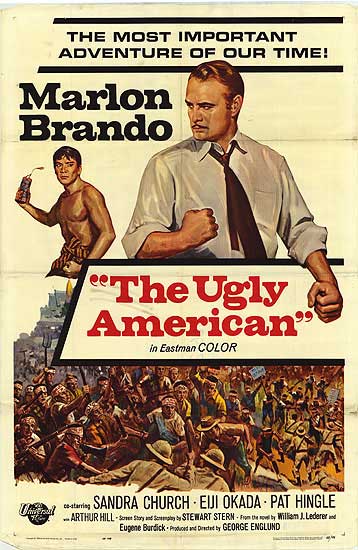
One of the things that I always hoped in going to other countries is that I could learn how to fit in, how to speak the language and learn to act in a way that was polite and culturally sensitive. While its certainly possible to learn language and manners, fitting in like a native anywhere but your own country is not a very realistic goal. Of course, I'm pretty sure I wont have problems like Brando did...


My accent will leave doubts that I'm a native Spanish speaker, and my physical prescence will confirm all those doubts. Besides having blonde hair, blue eyes and very fair skin, I am both tall and large,(maybe I can convince them I am a Cuban with a speech impediment and a thyroid condition). Now, Costa Rica is actually one of the countries in Latin America that has a larger percentage of lighter skinned people. Some sources about Costa Rican culture say that they are proud of their "whiteness", I don't know if that is the case or not, but I still know that I will stick out like a sore thumb.


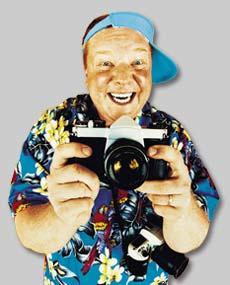
"Oh, Yeah, Like you blend..."


The point it that there is nothing I can do to avoid being conspicous. It's inevitable that I will be pigeonholed as a gringo, and all the negative things that go with that. Learning a language is about more than just learning the words of another language, more than learning how to conjugate verbs. Learning a language is really about learning to communicate in universal terms-not local. This means there is always a conflict in any type of cross cultural communication. We always have to go beyond our own prejudices and the prejudices of the others in order to communicate. The nature of communication between cultures always starts with the shock of the strange alien, and the eventual transformation of the alien to familiar as we find what is universal between us.

Neo-sociological-gobbledy-gook aside, I'm ready to accept the fact that I will stand out. What is great about this is I that once again I get to be the minority-I get to feel the same thing that Latino immigrants feel when they come to the US, I get to be alone in a strange place where everyone knows I'm not from there and they speak a language that I can't speak as well as they do. I've felt this way before in Mexico, but what astounded me was I was welcomed warmly and treated well. I only hope I can return the favor to Spanish-speakers when I meet them here in the United States.

Juanito

Next Costa Rica Entry: "Shopping and Packing for the Trip"

Friday, May 26, 2006

John's Sweet & Spicy Cole Slaw

It's hard to find good Cole slaw. Kentucky Fried Chicken is hit and miss, Applebee's is consistently mediocre. The Cole slaw you get from the supermarket is always too sweet or too mushy. My favorite is Long John Silver's-but its still not great. Recently, I started making my own, and I have come up with a recipe that is fairly unique, but it's not for everyone. It has a complex favor and a kick of chili sauce, but it's not an overwhelming heat.

Here's the recipe:

1 medium package pre-cut Cole slaw with carrot slices
(about 4-6 cups worth)
3 tablespoons ranch dressing
2 heaping tablespoons of Mayonnaise
(real mayo-not miracle whip or "salad dressing")
1/2 cup of milk (skim or 2%-your choice)
2 teaspoons of lemon or lime juice
(I prefer the lime-it blends better with the red chili flavor)
2 tablespoons of Franks Red Hot Sauce
(more or less-but it has to be Franks-regular Tabasco or Louisiana brand is too hot for this recipe.)
1/2 teaspoon poppy seeds
1/4 cup of finely chopped white onions
1/4 cup of Splenda granulated sweetener.
(I like my dressing sweet-you may want less).
2 tablespoons real bacon bits
ground pepper to taste

First, prepare the sauce. It doesn't matter what order you put the ingredients together as long as you mix them thoroughly so there are no clumps of mayonnaise. I would add the sweetener last, a little at a time so you can sweeten to taste-but don't skip it-its too spicy and bitter without the sweetener. Because the sauce is stronger than most, its important that you don't drown the salad in it. I would put the salad in a big bowl and add the dressing little by little until it is lightly covered.


OPTIONAL: Make this into a meal by adding a cup of small broccoli florets and a cup of chicken diced into 1/2 inch pieces, or maybe even some cold shrimp or crab. Serve with cold cantaloupe and sweetened ice tea. Perfect for a hot summer day.

-John

Tuesday, May 23, 2006

Looking at the Past


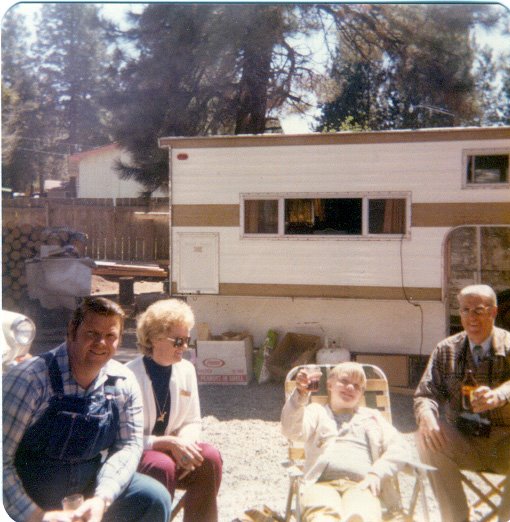
I found this picture in a box that my Mom gave me from my Aunt Marion's house. I'm sure it was Aunt Marion who took the picture. I'm the toe headed chubby kid on the chaise lounge, holding up an acrylic glass of my Grandma's sun tea. That's my Mom and Dad to the left,(Dad had some cool sideburns there). Sitting next to me on the right is my Uncle John.

We're in Bend, Oregon, sitting in the backyard of my grandparents' house. You can see the stacks of wood in the background-my grandparents heated most of their home with wood. I remember that my Uncle John and Aunt Marion would turn up several times a year and it would be a big event. They travelled everywhere and did everything.

One year they brought salmon that they had caught on the Oregon coast and canned. One year they brought fresh oysters and we fried up a whole bunch of them and had them with crackers and hot sauce-I think I used ketchup on mine.

I don't really have any deep things to say about this picture. I like the expression on my face and Uncle John's, I like the mock solemnity of the raised glass, like we are at some state dinner, instead of sitting in the grassless lawn next to the rabbit cages and wood piles of my grandparent's house. It's obvious from this picture that I was the baby of the family and was as spoiled as the little prince I thought myself to be.

I guess that's what makes it a special picture. It doesn't matter that I may have not grown up not knowing when to use a salad fork, or never having an ice sculpture for our centerpiece, because my childhood was for the most part fairly happy. My family did look out for each other and we did love each other and we enjoyed each other's company. Now, there were always some exceptions-but no more than anyone else's family. The point is, whether from redneck or high class, the actual family makes the difference, not the surroundings or the food.

Sitting in the backyard drinking sun tea, eating oysters with ketchup, I was as happy as I could be. It was a good day.

Juanito.

Thursday, April 27, 2006

Quite Possibly My Finest Spanish Sentences..Ever!

If you can't toot your own horn on your blog, I don't know where you can. I'm in the midst of writing an essay about the poem "Biografía" by Gabriel Celaya.

My thesis is that the poem illustrates how socialization can bring alienation. In other words, if you try to do everything that the world tells you that you "have to do", you will begin to lose your own identity and feel like you don't really exist. That's because not every message the world sends us is to be obeyed. We should not all buy SUV's, all women should not weigh 120 pounds, and drinking beer rarely causes attractive women to fawn all over you. Oh, yeah, and not everything that your mother tells you to do is always the right thing to do,(except you Mom, you're the exception, and I'm not just saying that because I know you will read this).

Here are the sentences I'm so proud of with English translations:

"Las órdenes de socialización son ruedas dentadas en una máquina designada para facultar la supervivencia de la raza humana, y nada más."


Which translates...

"The commands of socialization are wheels in a machine designed to enable the survival of the human race, and nothing more."


Here's another sentence that sort of adds another perspective to the first:

"Socialización intenta a formar la sociedad con la sutileza de un escopete..."


Which translates...

"Socialization tries to form society with the finesse of a shotgun..."


Now, I know that makes no sense out of context. But in context, the idea is that the messages we hear from school, family, mass media and our peers are not always values and instructions that apply to us specifically. Society does not have a plan for each person, even though God does. The important thing is we can't allow ourselves to forget that society has a one-size-fits-all perspective. All of the voices telling you what to do, and how to act are in conflict with each other. It's impossible to follow them all, and if you do you will lose what makes you special. You will be a clone, trying to be everything to everyone and never learning what you are supposed to be, never bringing to full potential all that makes you unique and valuable to the world.

Juanito

Wednesday, April 26, 2006

"Crazy" By Gnarls Barkley

I can't get enough of this incredible video. The album is still on pre-order at Amazon.


Juanito

Sunday, April 23, 2006

My Dirty Little Secret...

I always hoped when people got to know me they would think I was a very culturally sensitive, "international" kind of guy. You know, the kind of guy who knows which fork to use, who has the manners of a diplomat, who blends no matter where he goes, whose charm is legendary.

As with most things, intention and reality are entirely different. I'm really not that guy. Don't get me wrong, I'm not the uncouth redneck I was in my youth. I actually feel at ease in most settings. I rarely pull the kind of faux-paus that I was legendary for before I got married. Still, I have pretty much accepted that I will never be the refined gentleman I would like to be.

I still try to learn about culture as much as possible, especially Hispanic culture. One part of Hispanic culture that I have tried to excel at is learning about food. I know a lot about Mexican food in particular. I make a pretty good frijoles negros con chorizo from scratch(refried black beans with sausage). I still cannot make a Chili Relleno to save my life. I have tried every kind of food I can possibly find in the US. I've read books, hung around Hispanic supermarkets, schmoozed with short order cooks at taquerias, anything to understand food. I've tried all kinds of snacks, desserts, soft-drinks, anything different.

I really appreciate a good taco. I'm not talking some gringofied Taco Bell taco, I'm talking Carne Asada, onions and cilantro, lime, crumbly goat cheese, and sweet crema fresca. Add to that a nice, hot red or green salsa and wash it down with a Guava flavored Jarritos soda and we are talking a fine meal, the only thing better would be to complete it with some flan and strong coffee with cream and sugar.

I said all of that, to make this shocking confession. When I make tacos at home, I generally like to top them with cold Del Monte ketchup...


I know that's pretty sad, and hardly haute cuisine, but it still tastes good. I've eaten them this way since I was a little kid. I'm not going to change now. Now my lack of fine taste actually goes farther than just, "it tastes good". When I put ketchup on my tacos, it tastes like home. It tastes like I'm back in Bend,Oregon at 405 NW Federal street, having tacos with my Mom, Dad and sisters. It reminds me of when we would go to my Aunt Marilyn's house every New Year's day and have tacos and enchiladas with the whole family. It reminds me of the other holidays when my Mom would make her famous enchilada pie and we would all put sour cream on it, and eat it with saltine crackers, a green salad and wash it down with Sun Tea.

Food is not just part of culture. The sights, smells and tastes of food remind us of who we are. Food is history and food is family.

Juanito

Sunday, April 02, 2006

"Change"

My niece Linzi lives in Cincinnati with my sister and brother-in-law. Linzi recently won a nationwide contest for her poem "Change". Congratulations Linzi! We're proud of you! Here's the poem for all of you to read.

"Change"

By Linzi Campfield


The fear of change,
Is something scary yet great,
It’s the beginning of something new,
The start of something fresh

And even though it’s hard,
And it feels like your breaking inside,
The outcome is greater then could ever be imagined

It peels off the patterns that have come to rule our lives,
And lets in something new

It strips away the ordinary,
And lets in the extraordinary

So don’t be scared of change,
But embrace it,
Love it,
Call it your own

Never once be afraid,
But take hold of the opportunities it gives you,
Take hope in it and have courage,
For change is just a part of the beautiful rhythm that is our life

It’s a gift,
And should never be taken for granted.

Friday, February 24, 2006

The Big News

Finally I am in sight of living a personal dream. Ever since the first time I went to Mexico I wanted to go to a language school in a Spanish-speaking country. My professors have always told me that the only way to become truly proficient in speaking Spanish is by studying abroad.

I have tried several times to arrange a trip, but either the money wasn't there or I could not arrange it with the university. But recently I got permission from my job and the university agreed to give me credit for the trip. That means I can put the trip on my student aid, which is sort of important. I will be going to Costa Rica, to a town called Nicoya near the Pacific Ocean, (look at the red arrow on the map).

Here's the website for the school:Instituto Guanacasteco de Idiomas

I will be leaving in the middle of July and coming back in the second week of August. Besides the four hours of Spanish classes Monday through Friday, I will be living with a Costa Rican family, and yes, I am going to go to the beach at least once....

Because the University will be giving me credit, I will have to keep a journal-which I would do anyway. I'm planning on keeping it here-that will keep it safe for the time being. I picked a great time to go,(although it will be hot)-there will be two huge festivals while I am there, a religious one and a week-long patriotic one.

So what are my goals for this trip? Well, besides the obvious one of speaking Spanish better and losing some of my accent there are some other goals. I want to finally feel more at ease around Spanish-speakers. I want to learn those social lessons that can't be learned in a book. I want to get rid of some of those remaining,vague feelings that they are the "other". I know that sounds bad, but if we are honest with ourselves we know thats part of learning language and culture. Truly identifying with a group of people does not come about simply because you can speak their language-there is so much more.

While in some way I wish I could go all around the country and check all of it out-I don't like being a tourist like that, that's the way to get road-ugly and just fill up your camera while only talking to people in restaraunts and hotels. I'm looking forward to being around long enough I can make real friends and really understand this part of Costa Rica.

I've already bought my ticket and my new passport will be here any day-more updates as they become available.

Juanito

Next Costa Rican Entry:Feeling Nervous About the Trip

Monday, February 20, 2006

¿Por qué se va?

Here's a very short story I wrote as part of a composition in Spanish Literature class. What's different about this is that I wrote it in Spanish first and then translated it to English. I think it sounds better in Spanish. It also feels more Spanish, if that makes sense. Click the comments for the English translation...

En mi vida ella era el sol. Cada día se me aparecía, brillante y cariñosa, lista de hacer cualquier cosa que fuera necesario para satisfacerme. Me sentía como un rey, y ella era la sujeta única de mi reino. Ella me cubría con besos, abrazos y se me daba a comer cualquiera comida que me gustaba. Después de un año con ella, pensaba que mi sol saliera cada día para siempre. Como muchos reyes en mi placer y contento me olvidaba que la lealtad de los vasallos no estuviera garantizada.
“Querido, salguemos a un restaurante esta noche, estoy cansado, no quiero cocinar.”
“¿Qué? ¿Piensas que soy un rico? ¡Cállate chica!”
“¿Por qué me tratas así?”
“Te trato en cualquier manera que lo que quiera-eres la mujer, soy el hombre.”
En sus ojos, las lágrimas comenzaban de fluir. Ella me miraba fijamente. No dije nada. Después de cinco minutos que pasaban como un año, ella se fue para siempre. Ahora el rey vive solo con su orgullo y nada más…

-John

Sunday, February 19, 2006

Parent Teacher Conferences

Wednesday night I was asked to translate at a parent teacher conference at a local junior high school. It was a great experience, a real down-in-the-trenches translating job. Some of it was very hard, and some of it easy. Telling parents their kids are doing good in school felt good, but explaining to them how their hijos were failing to do their work felt kind of uncomfortable. It was such a change from the world of academic Spanish. I wasn't talking about "larger ways of defining the world around me", but the more everyday things like homework, tests and paying attention to the teacher.

Three or four times a week I get people who call the call center but don't speak English, but I don't get as much opportunity to speak to real native speakers every day as often as I would like, not like I did when I worked ten hours a day with native speakers.

On my way to the event tonight, I felt a little nervous. I was thinking,"It's been about six months since I did something like this, I hope I do ok." When I have doubts like this, I remember the only way anyone gets better at translating is to simply do it. Sure,you can go to school and drill verbs and vocabulary for hours on end. But unless you put yourself in situations where you have to stretch yourself, situations where there is a real possibility that you could end up looking dumb, without that kind of stress, you will always be stuck at the same level.

I think it's that fear of looking dumb that keeps many of us from improving beyond what I call, "Restaurant Spanish", ("¿Donde está el baño?" and "Más cerveza por favor"). As uncomfortable as it feels at the time, there is no substitution for real conversation. It's messy, it's a little confusing at first and it can be uncomfortable, like the times I had to tell parents why their child wasn't a good student, but even that was rewarding in a way. It was rewarding because they understood what was expected of them and their children. It was rewarding because my translation helped them to be a part of their child's education. I remember one lady I spoke to, she had a look that came over her face when she realized that her son had been less than truthful to her when he said he had no homework. This sly little smile that came over her face that unmistakably said, "Now I understand what's going on around here, and things are going to be different!" The look on her face made all the other uncomfortable feelings worth it.

-Juanito

Sunday, February 12, 2006

"Dear Native Spanish Speaker"


Dear Native Spanish Speaker,

I'm almost afraid to write this. I don't want to hurt your feelings. You were one of the main reasons I decided to learn Spanish in the first place. I remember when I worked with you in the frozen warehouse at Troyer Foods in Goshen,Indiana . I remember memorizing all of the words for chicken and chicken parts in Spanish, pecho, costillas,piernas . I remember sharing lunches with you and the other guys in the lunchroom. You were a such a kind and patient Spanish teacher, except for the time you gave me a Habanero pepper and told me, "¡cómelo-es como un tomate!". I think my stomach lining has finally grown back from that day when I felt like I needed to swallow a fire extinguisher...

I remember the first time I went to Mexico and how everyone was so patient with me and helped me learn more. I always felt like you were happy that I was trying to learn your language and about your culture.

It's been about 10 years since that first trip to Mexico. I know a lot more Spanish, but my accent is still a little rough. I realize that many of you are second-generation immigrants from Spanish-speaking countries. I know many of you are as proficient in English as I am.

But I have noticed something negative about you lately that I need to tell you about. I've noticed this on more than several occasions, so I know I'm not just being over-sensitive. When I come into your place of business where Spanish is spoken, you will only answer me in English when I speak Spanish to you. When you call the call center I work at, and you hear I'm not a native and have an accent, you will only speak broken English to me. You know, it's ok to mix the two languages in order to communicate, no matter what our Spanish and English teachers told us. Some of you have as thick of an accent in English as my accent in Spanish.

Now I know my Spanish is not perfect, but it is understandable. I've interpreted for groups and even spoken before groups of people without an interpreter and have been understood. This is not just the rant of a bruised ego. I expected that you would know what its like to want to learn a new language and have people talk down to you when you try to communicate in your new language.

I can identify with your desire to not be pigeon-holed as only a Spanish-speaker. You have every right to be proud of your accomplishment in learning Enlish. I truly understand that it took a real effort to learn a language that has more words than other languages, is not phonetic, has hundreds of rules and a thousand more exceptions. That said, only speaking to me in English is leading to a different problem.

How will America ever become a multi-cultural society if we only speak English in public? More specifically, if no one is willing to speak to Gringos with less than perfect Spanish,(or Mandarin or Vietnamese or whatever), how will we ever change? How will White America ever change from the culturally-myopic society if you only speak English to us? Gringos will continue to tell everyone "y'all need to speak Amahericuhn only, y'hear?" as long as they are able to walk through their day-to-day world only hearing English as the only language spoken.

The fact that many immigrants only speak their language with each other only helps this ethnocentric ideal of a one-language-one-culture country. Many people in the rest of the world regularly speak two or three languages. They can comprehend more ways of speaking, thinking and seeing the world. If other Gringos were to start hearing their fellow Caucasians speaking something besides English-maybe they would start to doubt this idea. Maybe they would start considering that speaking more than one language is important for everyone, not just academics.

I know this is idealistic, but that does not make it any less true. Real social change in the dominant ideas of a society are not always changed by some large government program. Sometimes the government is the worst way to fix society's problems. The idea that each of us can be the change we want to see in society is still valid. The changes in how individuals relate to one another on a micro-level will eventually cause changes to society on a macro-level.

Sociological gobbledy-gook aside, we need to break down these walls between us and relate like we are all Americans, no matter what language we speak. America is like any physical organism, our diversity will make us stronger and more vital. That diversity is what makes us a great culture. Don't cut off the rest of America from participating in all that the Latino cultures have to contribute to our nation.

Su Amigo,

Juanito

Wednesday, November 23, 2005

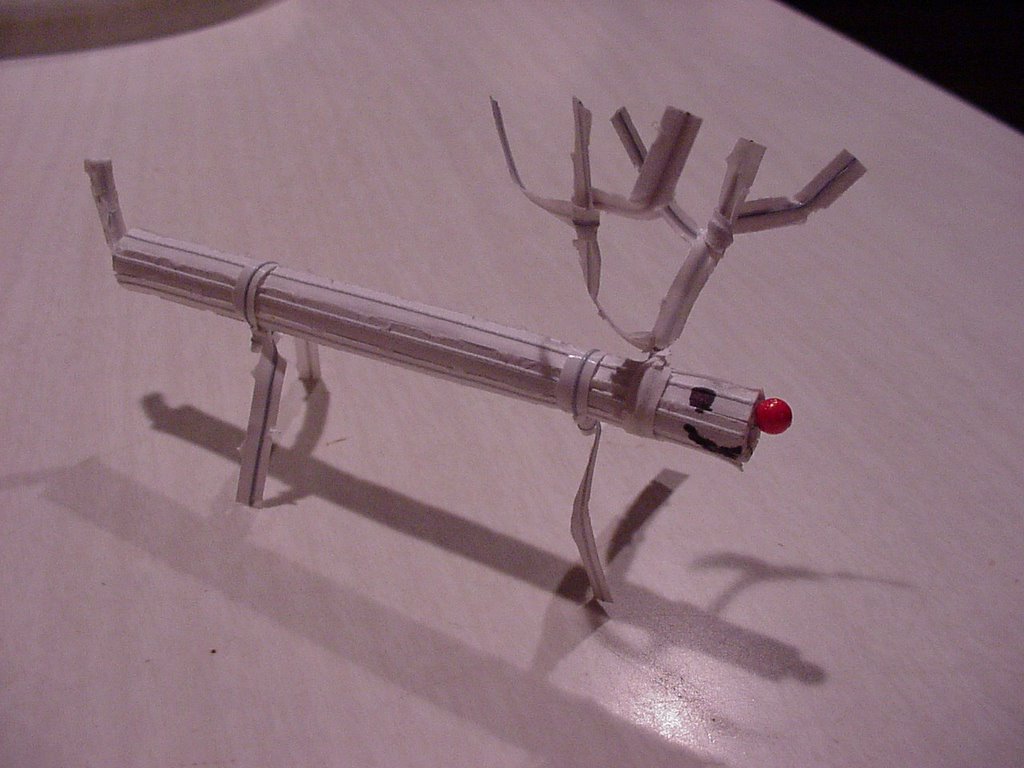
Twistie the Reindeer


I find myself wandering towards thoughts of Christmas now and then. It manifests itself in the strangest ways. My wife Laura says I become 9 from December through January(my birthday), but I think there's nothing wrong with that.

-John

Monday, November 07, 2005

Speak for America: Work for the National Security Agency!

This week at campus, the NSA was on campus recruiting. They had signs all over campus that said "Speak for America: Work for the National Security Agency." . They were looking for people that spoke other languages.

They were giving away free pizza, soft drinks, and even gifts for those who came to interview or turn in a resume. Those of you that know me think I would have been the first in line to check this out. Even if I did not get the job, free pizza and pop is on my list of cool things in the world. But as much as I want a job where I get paid to speak Spanish, I'm not interested in "speaking for America". At least, not the way we have been talking lately.

With our lack of real policy at the border with Mexico, and the allegations that our military and intelligence forces torture in the name of freedom, I'm not interested in being a mouthpiece for that kind of message.

I know every job we take makes us do things we don't like. There's no perfect job. But I've always said I wanted a job where I could be a bridge between the two cultures. I don't want to help someone else blow that bridge up...

-John

Click here to read a very interesting article on Torture from the Washington Post

Monday, October 03, 2005

Good News From Mexico

Latino countries have never been known as bastions of equality for women, but things are changing for the better in Latino America, just not as often as we hear on the news. Mexico, being such a large country, seems to always be receiving bad press about their record in this area.

Its no wonder, with all of the bad news we have been seeing coming out of Mexico. 431 women have died in Ciudad Juarez in Northern Mexico over the last 12 years in what appears to be sexually motivated murders (Prensa Latina). Many of the women in this same part of Northern Mexico work in Maquiladoras. Maquiladoras are factories owned by multinational companies who use Mexico's cheap labor to increase profits on items sold in the U.S. and other countries.

Many of the Maquiladoras like to hire young women, citing that they have nimble fingers that are suited this type of work and are good workers. The truth in reality has a lot more to do with the idea that some managers believe that these young women are easier to control and are not as likely to organize as a male workforce.

There are many other examples of inequality in Mexico, but I want to talk about something positive. I met a woman that exemplified some of the positive changes in Mexico on my last trip. Her name was Marí­a. She is a dentist in Ciudad Victoria.

We were all stuffed in a van on the way back to our hotel in Tampico after a grueling day of working in the free dental clinic in a village on the Gulf of Mexico. The van was bouncing and dodging rocks and the occasional cow, then came to a complete stop because of a valiant skunk in the middle of the road that threatened to spray the van if we moved any closer.

I started talking to Marí­a about my research paper that investigated the conditions in Maquiladoras. She seemed interested, and then she explained how there were positive changes going on in Mexico in the lives of women. She owned her own dental practice, managed it, and had a good business. Amazingly, her husband stayed at home and took care of the house. There is evidence that this is becoming more common, especially in areas where a lot of women work in the maquiladoras.

What struck me about this conversation was how Marí­a was another example of how preconceived notions about gender and even our prejudices about different countries keep us from seeing the whole truth. Mexico is not inhabited entirely by those outdated caricatures of macho men with big mustaches and dark-eyed, fiery, yet demure women. Mexico is changing like the rest of the world, many times for the better. It just may be hard to see it from the picture the media paints.

Finding who you are and how you fit in society can be such a struggle, no matter what country you live in, but it's not without hope. There are still people who define themselves by more timeless truths, instead of letting their society define them.

-John

To learn more about maquiladoras, visit:http://www.cfomaquiladoras.org

Here's an interesting paper on machismo also:
http://www.fgvsp.br/iberoamerican/Papers/0456_Machismo6-2003.pdf

Monday, September 19, 2005

"Day By Day"

Now you have a reason to visit Casa De Juanito cada día(every day). Even though I don't update everyday, there is something new here every day. You can read one of my favorite political comics,
"Day By Day" here every day. This is a great comic with the biting sarcasm of Doonesbury without the unrelenting Liberal bent, but its not a mouthpiece for Fox News. It knows when to speak out against this administration's mistakes, which seem to be growing worse...

Scroll to the very bottom of the page and it is after the last post.

Thanks,

Juanito

Sunday, April 17, 2005

"Disco Queen of South Bend"


You find the funniest things surfing Google News...

Check out this news snippet about our Secretary of State, Condoleeza Rice. This is from the Boston Globe,

"...But perhaps the most surprising news came from the editor who introduced Rice, saying the secretary of state once held the title of ''Disco Queen of South Bend, Indiana."

'You've got quite a research department,' Rice responded in the opening sentences of her address. 'I want to assure everybody, it's actually not that hard to be the disco queen of South Bend, Indiana,; Rice said. 'There's not that much competition in South Bend, Indiana.' "


It's official....South Bend is being dissed nationwide as a boring burg.

-John

Monday, March 28, 2005

¡No me ayudas gato!


"You're not helping any, ya know!"
He rolls over on his back and reaches out a soft furry paw. It always appears like he's reaching out in a gesture of friendship, but he's only wanting me to scratch his ears. He doesn't care if I finish my homework or not, rotten cat!

Maybe I'll just scratch his ears for 10 minutes and get back to my Spanish homework...

-John

Friday, February 18, 2005

Visit Sunny Puerto Rico...


I'm really enjoying my new Spanish class,"Spanish For Teachers". We learn to debate, and tell stories, even be rude in Spanish(too cool!). One of the things we have to do for exams is make recordings of ourselves speaking in Spanish.

For the first test I had to make a recording where I read an advertisement for a travel agency in Puerto Rico. I thought it was ok(I still need work on my accenty). Actually, it really struck me as sort of funny. It sounds more like a smooth jazz DJ on Valium. Click below to hear the MP3.

"De viaje a Puerto Rico"


-John

Monday, January 31, 2005

37 years old...


Today is my birthday. I turn 37 years old. It's not as scary as a few years ago when I turned 34. I remember that day, because it was the day I finally made up my mind to go back to school and study Spanish seriously. Growing older isn't bad, when you've got something to work for, as opposed to feeling like you are just swimming in that working-for-a-living numbness that swallows most of us up from time to time.

We had my party yesterday. It was really great. I made such a haul! Here's what I got:

-Three Diego Rivera Art books
-The DVD "Romero" about Salvodoran Archbishop Oscar Romero.
-"Versos Sencillos" by José Martí-One of the classics of Latin-American poetry.
-"Pensées"("The Thoughts")-By Blaise Pascal-great apologetical writing.
-Chocolate!
-Coffee!
-Money!

We had Papa John's Pizza, Chocolate Eclair Cake and Mango Jello Cool-Whip cake, and played cards afterward for a few hours, and I actually won! It was one of the best adult birthdays I have ever had in recent memory.

Here's a picture from one of the Diego Rivera artbooks I got for my birthday. Its called "Night of the Poor".

Photo Hosted at Buzznet

Tuesday, January 11, 2005

Marion Fouty


My great Aunt Marion died around 9 am in the morning on Tuesday the 11th of January. She was a teacher for many years near the Mexican border. She taught classes with Native and Mexican-Americans in her classroom. She was extremely intelligent, and one of the most independent women I have ever known. However, I was glad I was never her student, as she was never described as a "softy".

That does not mean that she was not a loving person. There is a memory I have of her that means a great deal to me. When I was sixteen, I dropped out of high school and took the GED exam. I passed the exam and went to some technical classes and later on went to a two year school called Rhema. Now after all of these years, I am on my way to getting a degree. In some ways, Aunt Marion was an impetus to continue school.

After I took the GED, I struggled with a kind of academic inferiority complex for a while. Even though it is the equivalent of graduating high school, some people look down on it. I remember very clearly on several occasions when I was a teenager how Aunt Marion looked me in the eye, and with a very serious tone and said "John, don't you ever feel ashamed about taking a GED! You can still go to college and do well!".

The look in her eyes explained very clearly that there was no discussing the pros and cons of the issue. I had been told the truth, period. For years after that, she was always one of my "boosters". When I graduated from Rhema, when I got published, and other times in my life, she was always there encouraging and supporting me. She was very excited when I started studying Spanish and encouraged me to continue. She always sent hand written cards for my birthday, our wedding anniversary and so on.

Besides her loving actions, the way she and my uncle John presented themselves was always an inspiration to do better. She was an educated person who made the world a better place, and he was a celebrated World War II pilot. They always made me proud to be part of this family. I will miss her very much.

-John

Spanish For Teachers..


Today was the start of my new Spanish class here at Indiana University. It's called "Spanish For Teachers". Its actually a class devoted to oral Spanish and learning how to speak Spanish in different situations, such as to children, or in a professional situation, etc. I really like my professor, she is from Puerto Rico and seems very smart and kind, but also has real plans to make us all work very hard.After class, one of my classmates said "Tengo miedo!"(I'm scared!). I felt the same way.

Fear aside, I really want to put all I can into this class. Sometimes I get sloppy in my Spanish, since I know that Spanish speakers will cut me some slack just because I'm a gringo. But if I truly want to make a living at this, I have to bring my speech up a notch, so I can gain the respect of those I speak to, and not just amuse them with "restaurant Spanish".

-John

Monday, January 10, 2005

My Mission Statement


I hate "corporate-speak". You know what I mean, such as when people throw words like "resource" and "shifting paradigms" into every sentence just so they sound intelligent(most of us can barely spell paradigm, let alone shift one). Multi-syllable words filling vague sentences are not the same as plain, coherent speech.

The company I work for actually has a very succinct mission statement:"We are committed to reducing downtime and repair expense for our customer's trucks." At least that's how I remember it in orientation.

Recently, I was asked in a class we have been attending, what was my personal mission statement. That's a good question. I'm still thinking about it, but here's what I have for now.

I want to be a bridge between English and Spanish-speaking cultures. I want to help the two groups understand the differences between them.

I guess thats as good as I can come up with for now.

-John